The disposable camera, explained.
A disposable camera is a plastic camera sold with a roll of film already inside. You shoot the roll, hand in the whole camera, and the lab gives you back your photos. Here's how they work, how to get good photos out of one, and the version on your phone.
Two free rolls · No account · No ads



How a disposable camera works
There's almost nothing to set. Fujifilm's QuickSnap, for example, has a plastic 32mm f/10 lens with fixed focus and a single shutter speed, so you can't zoom, focus or check the shot. Before every photo you turn the wheel to wind the film on, which also readies the shutter, and a counter shows how many shots are left.
For the flash, you turn it on and wait for it to charge: on the QuickSnap you flip a switch on the front and wait for the red light on top, and Kodak's FunSaver has to be charged before every picture.
Inside, the film is wound out of its canister at the factory, and each time you wind on, the frame you've just taken goes back in. When the counter reaches 0, the whole roll is back in its canister, ready for the lab.
How many photos does a disposable camera take?
Most take 27. Fujifilm's QuickSnap and Kodak's FunSaver both come with 27 exposures, a number Fujifilm settled on in 1992, when the QuickSnap went from 24 photos to 27. Kodak's Daylight, which has no flash, comes with 27 or 39.
There's no deleting and no retakes, so every one of them counts.


How to get good photos from a disposable
The camera can't adjust to the light, so a few habits make all the difference:
- Use the flash indoors, at dusk and in the shade. The fixed lens needs plenty of light, and dim photos without flash come out dark and murky.
- Stay within the flash's reach: 1 to 3 metres on the QuickSnap, and 1.2 to 3.5 metres on the FunSaver. People further back come out dark.
- Don't get too close. The lens has a fixed focus, and Fujifilm advises standing at least 1 metre from your subject.
- Wait for the flash's ready light before you press the shutter.
- Keep the sun behind you or to one side, and your fingers clear of the lens and the flash.
- Wind on straight after each shot, so you're ready for the next moment.
Getting it developed
When the counter reaches 0, the roll is finished. Don't open the camera: makers warn against taking it apart, because the flash works at a high voltage. Take the whole camera to a shop that develops film, or post it to a lab.
Colour disposables are developed in C-41, the standard process for colour negative film, so any lab that handles colour film can take them. A few black and white cameras, such as Kodak's TRI-X single-use camera, need a lab that develops black and white film. Ask for prints, scans or both, and check whether you'll get your negatives back.
What a disposable camera costs
The camera is only half the bill, because the roll has to be developed too. At shops' own prices on 16 October 2026, a 27-shot disposable and its developing with scans came to about £32 in the UK, or $37 in the US: £1.18 a photo in our UK example, and from $1.37 in our US one.
Disposable camera
One roll · 27 photos
- Fujifilm QuickSnap FlashArgos · 27 shots
- £17.99
- Developing and scansAnalogue Wonderland · Postage to the lab included
- £13.95
Prices checked 16 October 2026
The disposable camera on your phone
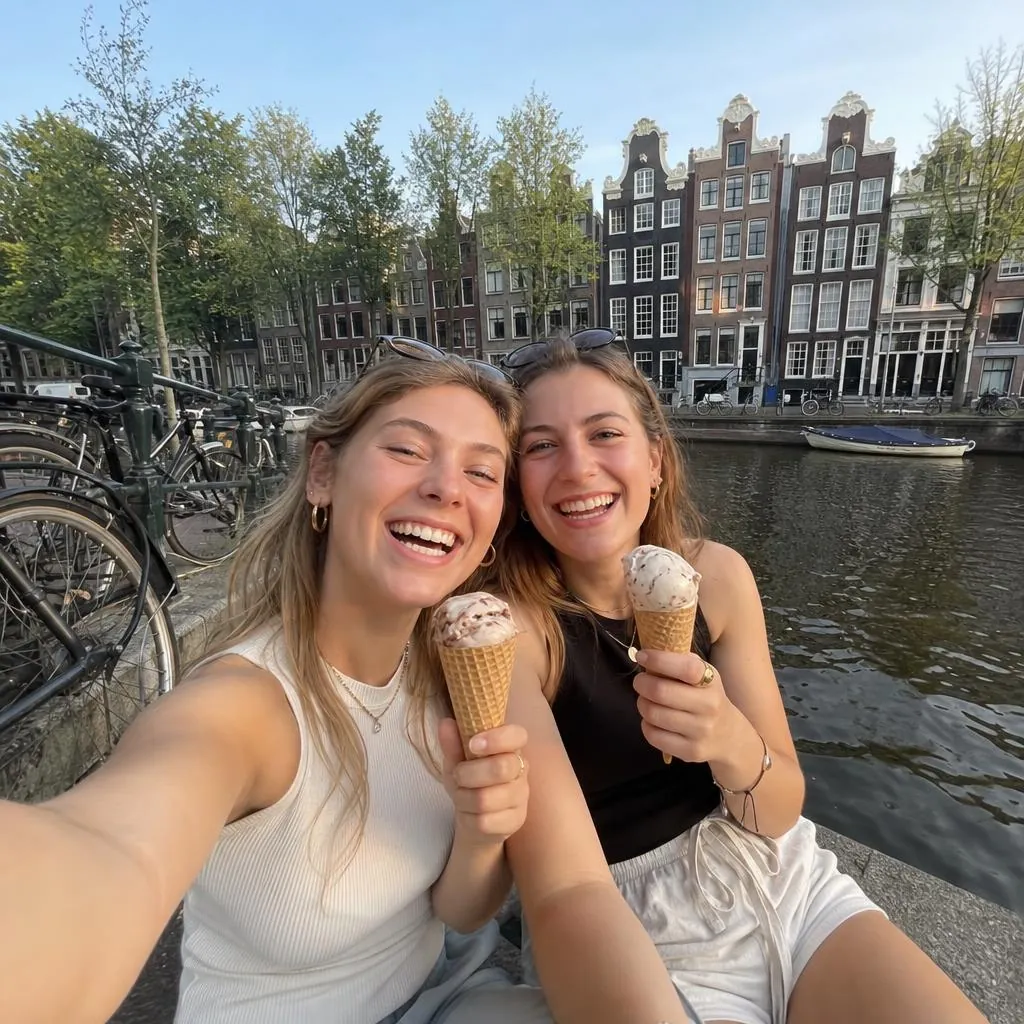
DisCam works the same way, with your phone's camera. Load a Disposable roll, wind the wheel on before every shot, and see nothing until you develop the roll. Then the prints feed out one after another, like opening the envelope from the lab.
Prefer to see each photo straight away? Load an Instant roll and watch every print develop in your hand. There's no film to buy and no lab: rolls develop on your phone, whenever you choose.
Wind on between shots. Reveal them later.





Winds the film on to the next frame. Drag it to the right, or press it.
Wind on for your first shot
Questions
- When were disposable cameras invented?
- Fujifilm launched the QuickSnap in July 1986 and calls it the world's first single-use camera. Kodak's Fling followed in 1987.
- Can you reuse a disposable camera?
- Not as it's sold. The film comes out at the lab, and makers warn against taking the camera apart because the flash works at a high voltage. Fujifilm asks labs to send used cameras back, so it can reuse and recycle the parts.
- Can a disposable camera go through airport security?
- Yes, but X-rays can damage film that hasn't been developed. The TSA recommends packing cameras with undeveloped film in your hand luggage and asking for a hand inspection, and Kodak advises against putting unprocessed film through CT scanners, which are also used for checked bags. In the UK, Gatwick advises keeping film out of its X-ray machines.
- Do disposable cameras expire?
- Yes. The expiry date is printed on the box. Kodak recommends using film before that date, keeping it somewhere cool and dry (no warmer than 21°C) and away from places like a car in the sun, and having it developed soon after you finish the roll.
- How long does developing take?
- It depends where you go. When we checked in October 2026, Walgreens quoted 3 to 5 business days, Walmart about six days and Boots 9 working days in store, while many Snappy Snaps shops can develop film within an hour. By post, The Darkroom quoted 2 to 5 days in the post and 2 to 4 days at the lab.
- Is a disposable camera the same as an instant camera?
- No. An instant camera prints each photo straight away on instant film. A disposable is loaded with negative film, which has to be developed before you can see anything.
- Is there a disposable camera app?
- Yes. DisCam is a disposable camera app for iPhone and Android: rolls with a set number of shots, a wheel to wind and photos you only see once you develop the roll.
Get DisCam
Shoot your next roll on your phone.
Start with two free rolls of 5 shots each, one instant and one disposable. DisCam Pro unlocks unlimited rolls, stacks and photos. No account and no ads.